
La Pedrera (Casa Milà): Gaudí's Stone Wave — Barcelona Travel Guide
Tickets, the legendary rooftop and the best time to visit Gaudí's last civil work.
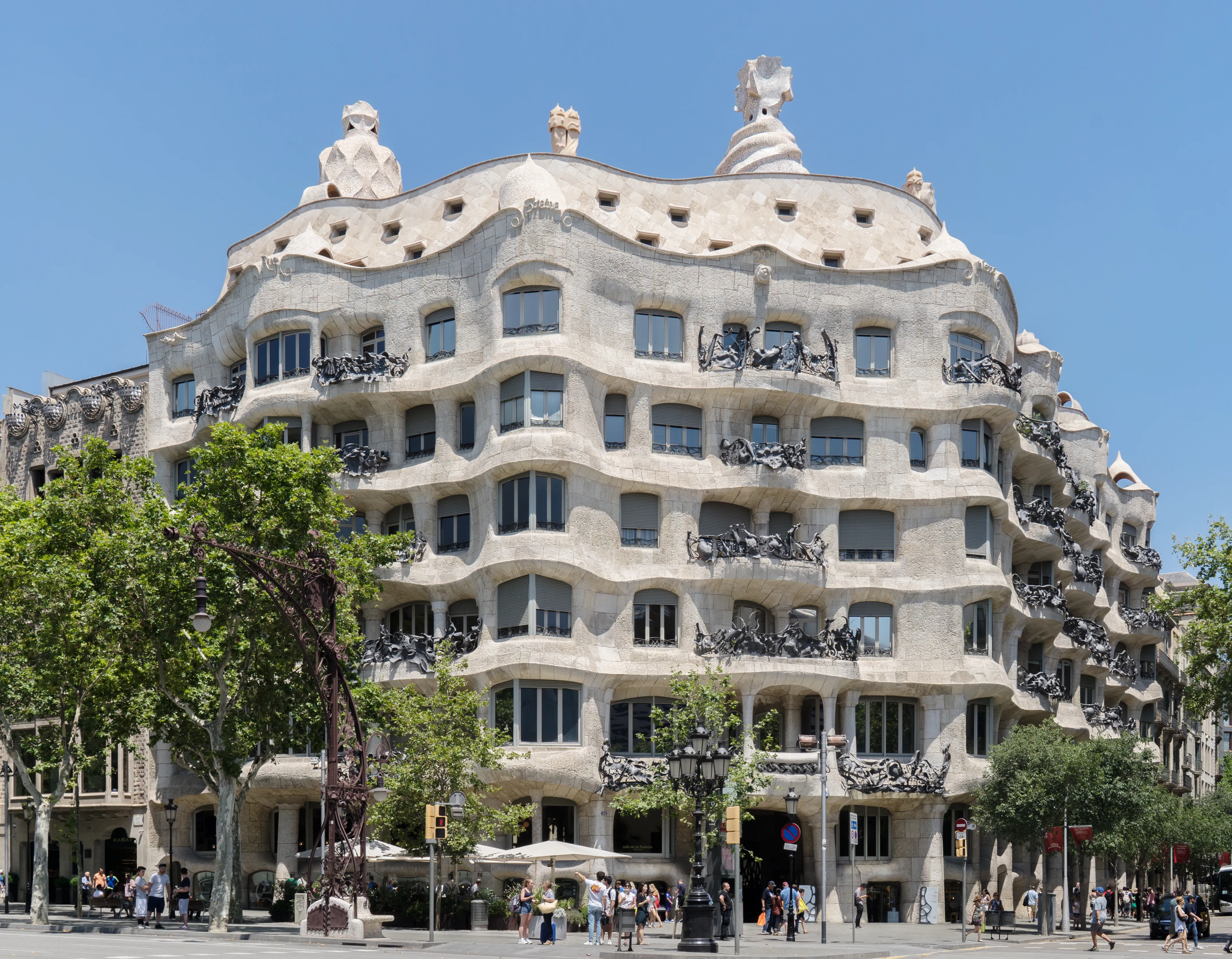
No travel to Barcelona is complete without Casa Milà, better known as La Pedrera. Gaudí built it between 1906 and 1912 as a luxury apartment block, and its self-supporting stone façade — with not a single straight line — caused a scandal at the time. Today it is a UNESCO World Heritage Site and a must on any Barcelona travel itinerary. Here is how to plan your visit.
Tickets and visit options
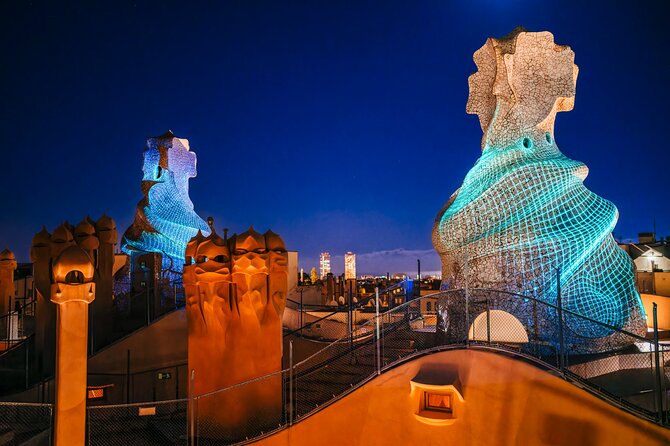
Buy online at the official site (lapedrera.com). There are two main experiences: the daytime visit (apartment, attic and rooftop) and the evening "Night Experience" with a light-and-music show on the roof. Both sell out in summer, so book your slot as part of your trip planning rather than turning up.
What to see inside
The rooftop
The reason most people come: a surreal terrace of warrior-like chimneys and ventilation towers, several aligned with views of the Sagrada Família. It is one of the most spectacular rooftops in Europe.
The attic (Espai Gaudí)
Just below the roof, 270 parabolic brick arches form a space like the ribcage of a whale. It now hosts an excellent exhibition on Gaudí's methods.
The period apartment
A restored flat furnished in early-1900s style shows how Barcelona's bourgeoisie actually lived in a Gaudí building.
How to get there
Metro L3 or L5 to Diagonal leaves you at the door. La Pedrera sits on Passeig de Gràcia, a five-minute walk from Casa Batlló, so the two pair naturally in one morning.
La Pedrera or Casa Batlló?
If you only have time for one Gaudí house, La Pedrera wins on the rooftop and the sense of scale; Casa Batlló wins on colour and fantasy. Doing both back to back is one of the best half-days in the city.
Keep planning your Barcelona trip
Continue on our Barcelona travel blog with the Sagrada Família guide and the Park Güell guide, then refuel with our Barcelona food guide.