
Gothic Quarter: A Self-Guided Walking Tour
Two thousand years of history in ninety minutes — Roman Barcino, medieval squares and the corners the tour groups miss.
The Barri Gòtic is the oldest part of Barcelona, built on top of the Roman colony of Barcino founded around 14 BC. Its narrow streets hide Roman walls, a Gothic cathedral, royal palaces and some of the city's best small bars — all within an area you can cross on foot in fifteen minutes. This self-guided route takes about ninety minutes at a relaxed pace, more if you stop for vermouth (you should).
The Route, Stop by Stop
1. Plaça Nova and the Roman towers
Start at Plaça Nova, in front of the cathedral. The two cylindrical towers flanking Carrer del Bisbe are part of the original Roman gate — people have been entering the city through this exact spot for two thousand years. The bronze letters spelling "BARCINO" make a popular photo.
2. Barcelona Cathedral
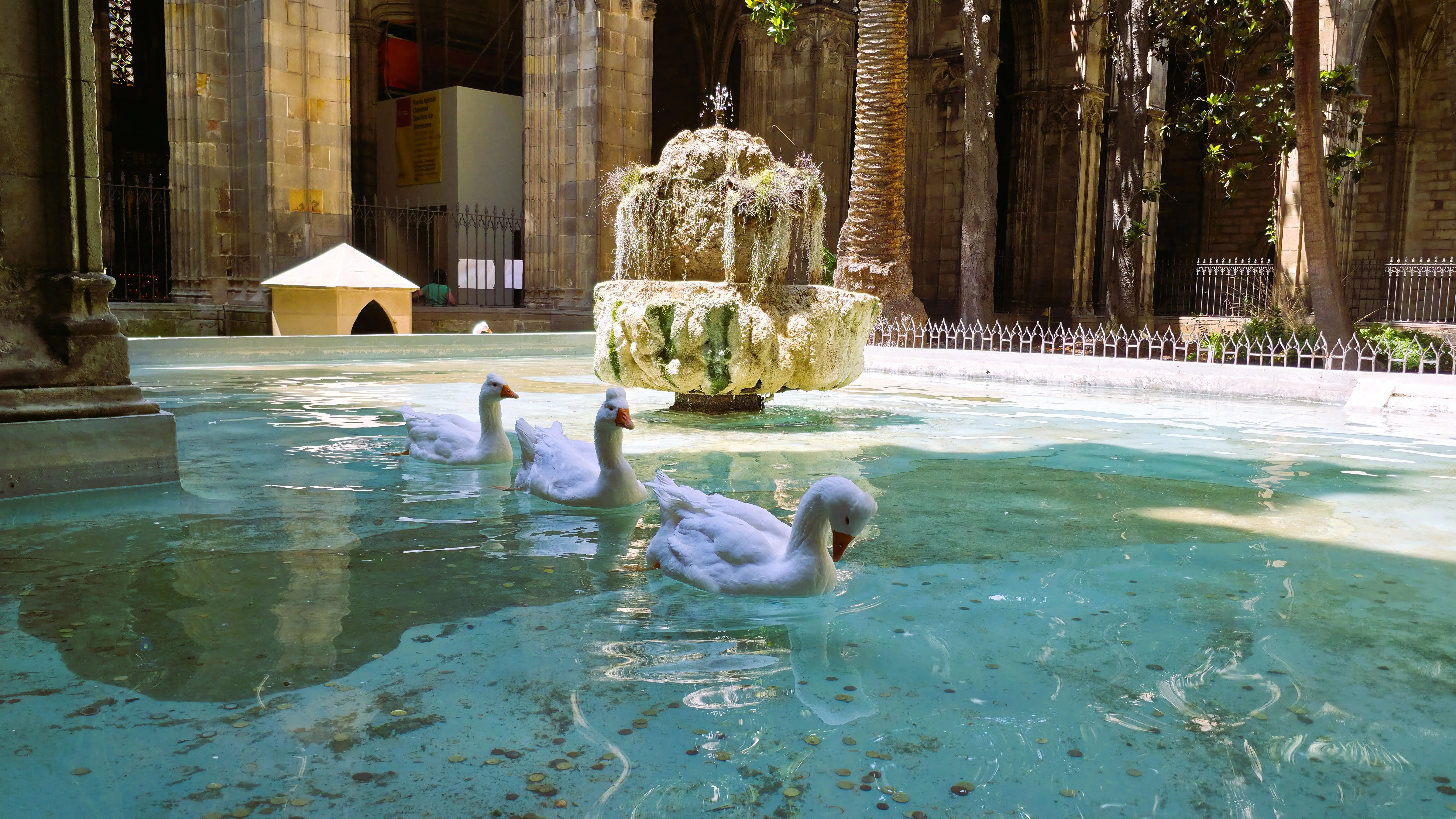
Not to be confused with the Sagrada Família — this is the city's actual cathedral, completed in the 15th century (the façade is a 19th-century addition). Entry costs around €11 and includes the cloister, home to thirteen white geese, one for each year of the life of Santa Eulàlia, the city's co-patron saint. The rooftop lift is included and gives an unusual view over the old town's terracotta roofs.
3. Carrer del Bisbe and the bridge
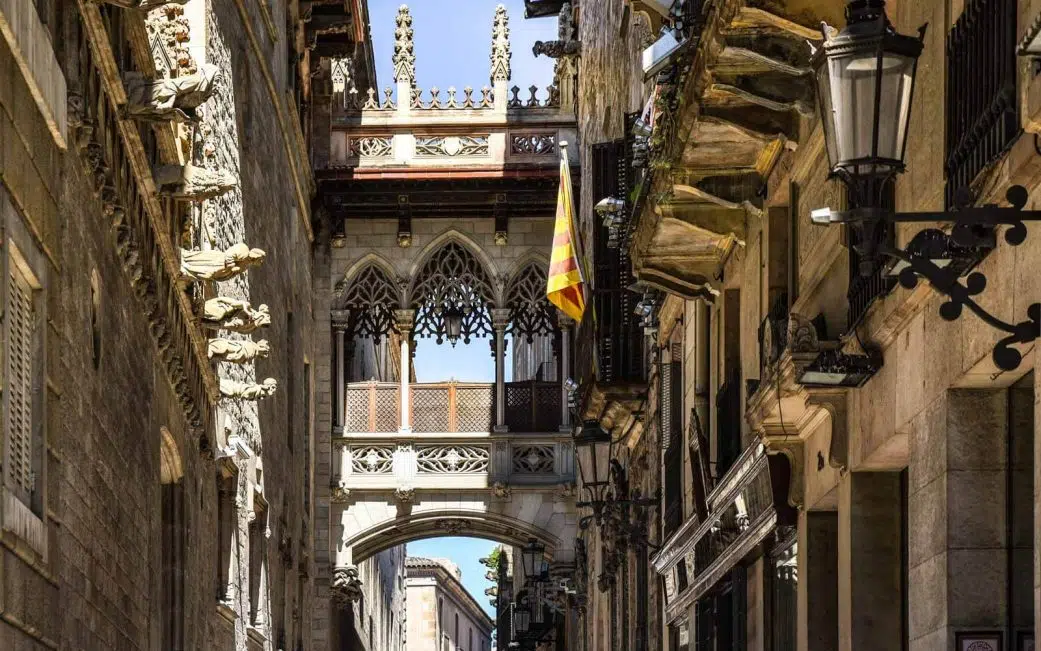
Leave the cathedral and walk down Carrer del Bisbe toward the ornate stone bridge connecting the Generalitat palace to the canon's residence. Most visitors assume it is medieval; it was actually built in 1928 by Joan Rubió, a student of Gaudí. Local legend says that if you walk under it backwards while looking at the skull carved on its underside, your wish comes true.
4. Plaça Sant Felip Neri
A few steps off Bisbe hides the quarter's most moving square. The pockmarked church wall is shrapnel damage from a 1938 bombing during the Civil War that killed 42 people, most of them children sheltering in the basement. It is a quiet, beautiful place — please treat it accordingly.
5. Plaça del Rei
The best-preserved medieval square in the city, enclosed by the old royal palace. Legend has it that Columbus was received here by the Catholic Monarchs after his first voyage. Beneath your feet lies the MUHBA city history museum, where you can walk over excavated Roman streets, a winery and a garum factory — one of Barcelona's most underrated museums (~€8, free Sunday afternoons).
6. The Temple of Augustus
Inside a nondescript courtyard at Carrer Paradís 10 stand four Corinthian columns from the Roman temple that once crowned the city's highest point. Entry is completely free, and most people walk straight past the door without knowing it exists.
7. Plaça Reial
Finish at the quarter's grandest square, just off La Rambla — palm trees, arcades, and lampposts that were Antoni Gaudí's first commission. It is touristy but earns its reputation, especially after dark when the music venues open.
Practical Tips
When to go: early morning (before 10:00 am) for empty streets and the best light, or early evening when the stone turns golden. Midday is the most crowded.
Watch your pockets: the Gothic Quarter is safe, but it is the city's pickpocketing hotspot. Keep phones out of back pockets, especially on La Rambla and in crowds around street performers.
Getting there: metro Jaume I (L4, yellow) or Liceu (L3, green) leave you at opposite edges of the quarter — start from either.
Keep Exploring
From Plaça Reial you are twenty minutes by metro from Gaudí's two icons — see our guides to the Sagrada Família and Park Güell. And before you sit down at any restaurant near La Rambla, read our guide to eating well in Barcelona.